Hey, fellow wanderers! If you're gearing up for an epic adventure of country-hopping, either solo or with your significant other, you're in the right place. For 10 months, I visited several countries with my boyfriend, and I've compiled 11 essential tips to make your long-term travel experience smooth sailing.
Tip #1: Google My Maps
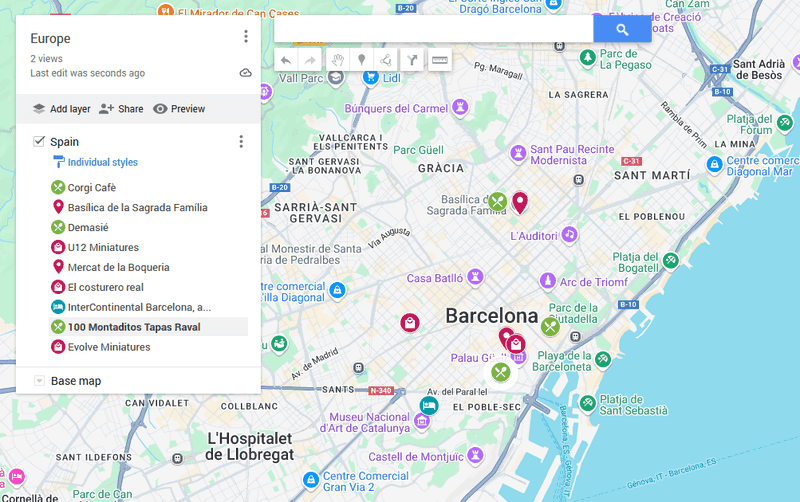
First things first, get acquainted with Google My Maps. This amazing Google service allows you to curate a personalized map with all your must-visit spots, eateries, and activities, all in one place. You can also customize it with your own icons! Having directions at your fingertips will streamline your daily explorations. Especially if you don’t like planning a minute-to-minute schedule, you can pop open your map to see what spots you have saved that are closest to you in the moment. As an example of what this looks like, I've created The Enchanted Atlas, a still-growing map of fantasy-like places I've personally been to. Alternatively, if you want something more minimal, you can utilize the saved pins feature in your Google Maps app instead.
Tip #2: Sign Up for Travel Rewards Programs
Maximize your travel budget by signing up for travel rewards programs. Accumulating points and miles can lead to significant savings on flights, accommodations, and more. There are many out there. I used Booking.com's Genius loyalty program, and one of the benefits is that you get 10-20% off hotel stays. It didn't cost me extra; all I had to do was complete at least 15 stays within 2 years to get Genius Level 3 (the highest you can get), and if you're traveling long-term to various locations, it's the perfect time to rack up a ton of stays/points.
Tip #3: Utilize Airbnb for Extended Stays
If you're planning to stay longer than a week in one location, consider booking an Airbnb. You can often snag better discounted rates for extended stays compared to traditional hotels, especially if you’re staying for a month (>28days) or more. Long stays can be more cost-effective than hotels and even hostels, and when it's time to do laundry, Airbnb offers better choices for washers and dryers.
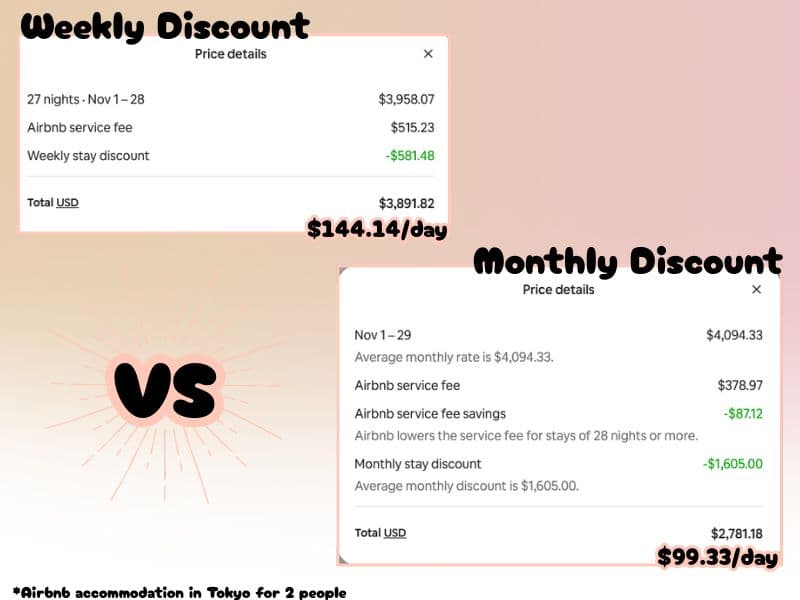 Above are screenshots from a Tokyo Airbnb comparing cost differences for if you stay at least 28 days and one if you stay less than 28 days, the one with 28 days gets applied a monthly discount that ends up saving you over $44 a day compared to reserving for 27 days, which only receives the weekly discount.
To sum up, this tip is tailored for couples or individuals who value privacy and a good night's sleep more than cost. While I usually recommend hostels, they are more suitable for solo travelers looking for budget-friendly options and social interaction.
Tip #4: Learn Basic Phrases in the Local Language
Before you jet off to your next destination, take the time to learn at least 10 words in the local language. Begin with basic phrases such as "hello," "thank you," "please," and the numbers 1-5 (helpful when ordering food). It'll go a long way in fostering meaningful connections with locals.
Tip #5: Install the Google Translate App
The Google Translate app is a lifesaver for navigating language barriers. Install it on your phone and use features like live camera translation for signs, menus, or documents. There were also instances where I used the live audio translation to translate more quickly. It was more of a hassle for the locals to respond via your phone's specific language keyboard.
Tip #6: Check Wi-Fi Speeds
Ensure a seamless digital nomad experience by reviewing or asking about the Wi-Fi speed at your accommodations. A stable internet connection is essential for remote work. The staff can quickly check speeds using a simple Google search phrase, ‘my internet speed’, which will steer them towards a speed test link, like this one from Ookla. During our travels, my boyfriend was working remotely and needed speeds of at least 100 Mbps to handle video calls and coding tasks.
Tip #7: Add Travel Insurance
Travel insurance is a non-negotiable for international, long-term trips. It should cover both trip-related issues (like cancellations or lost luggage) and medical emergencies. I used World Nomads Insurance back in 2022 and went with their Standard Plan + Sports & Activities plan. At the time, it cost me around $86 per month, which covered everything from emergency healthcare to missed flights. Prices have gone up since, but the peace of mind was worth every cent, especially when traveling across different countries with varied medical systems.
Tip #8: Embrace Slow Travel
Take the time to immerse yourself fully in each destination (and recover!) by embracing the art of slow travel. As much as I want to cram things all in one day, I eventually end up too tired throughout the day. By spreading out your trip, you can take rest days, spend more time at each spot, and even accommodate for any scheduling issues that might come up. Aim to stay in each country for at least a week or longer if you’re exploring multiple cities.
Tip #9: Research Weather Patterns
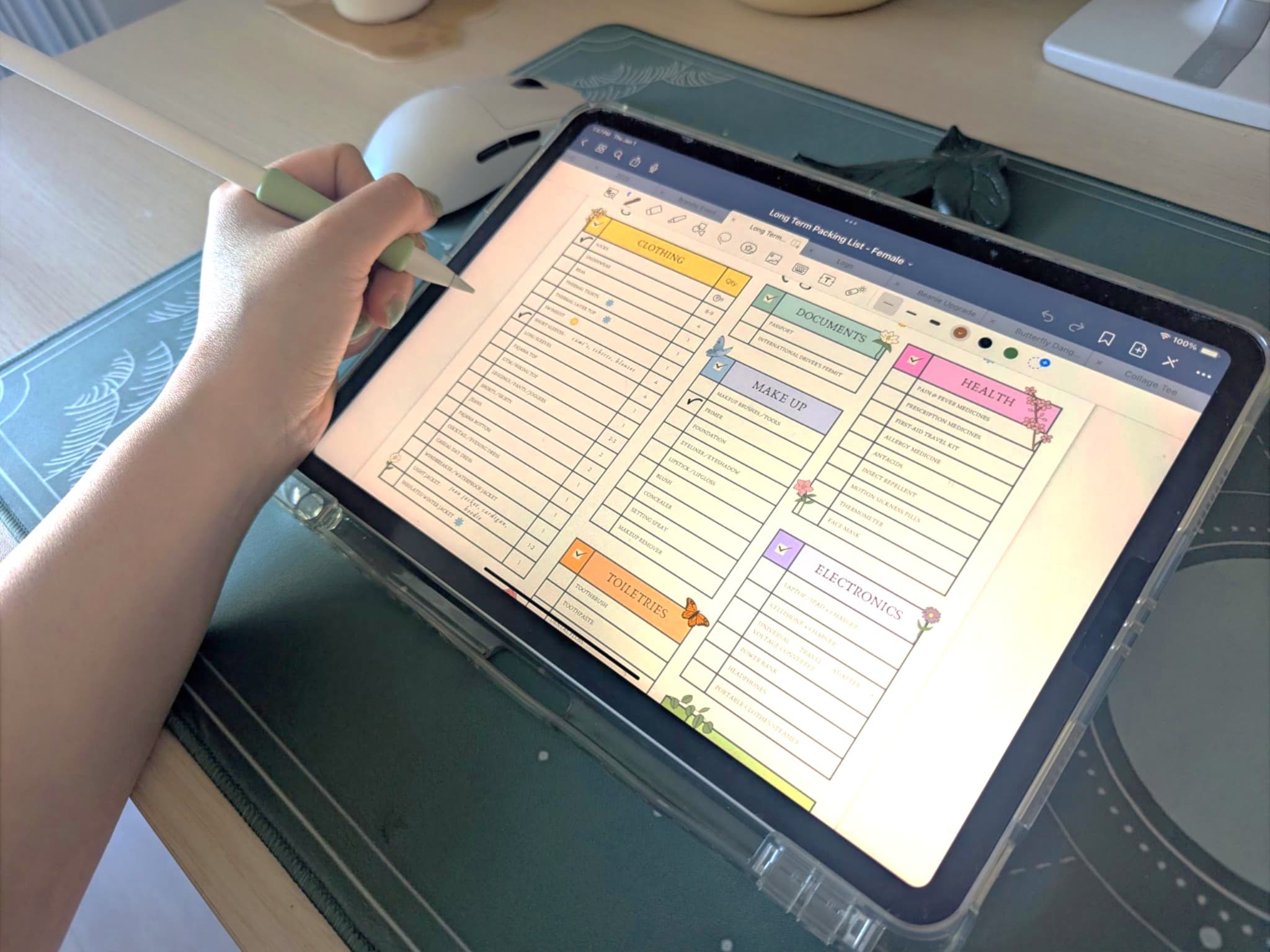
When planning a trip months in advance, don’t just Google “average temperature in X during Y month.” Instead, specifically look up the previous year’s weather during the same period for a more realistic picture. This small step has saved us from overpacking and unexpected wardrobe issues. You can check out my packing list here for ideas on what to pack for year-round climates.
Tip #10: Leave Room for Souvenirs
Leave some extra space in your luggage for keepsakes and treasures you’ll want to bring back. Trust me, you’ll thank yourself later when you're hauling back handcrafted art or market finds. If you’re a minimal packer, check out my post on collectible souvenirs for ideas on small items that will fit into your luggage.
Tip #11: Organize Travel Documents
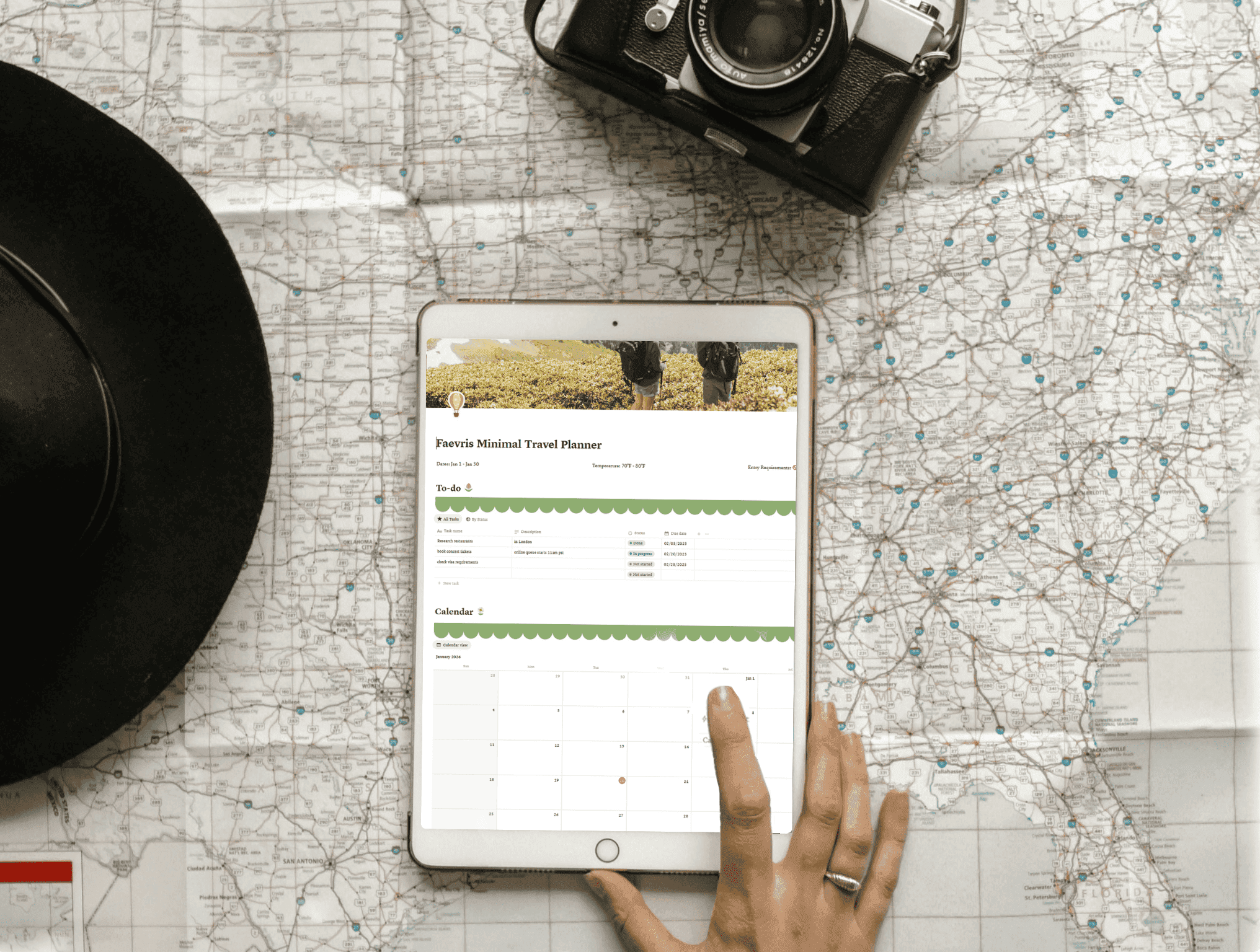
Keep all your travel documents, event tickets, and important dates in one organized hub, whether that’s a physical folder or a digital tool. There were many times I had to find my flight confirmations, travel visas, must-visit restaurants, and other important details on different devices. So, I use a Notion travel planner with a built-in calendar, rough itinerary section, key info, and an embedded Google My Maps. It keeps everything central, tidy, and accessible, even offline. Feel free to take a look at my minimal travel planner on Notion.
🌍 Embarking on long-term travel is an exhilarating journey filled with endless possibilities. By following these tips, you’ll not only navigate diverse landscapes and cultures with confidence but also create memories that will stay with you for a lifetime. Safe travels, adventurers! ✈